



March 18, 2024
Their steel structures are exceptionally strong and precisely manufactured. The entire production process was highly professional.
Oct 15, 2026
When industrial projects demand structural integrity without compromise, a Steel Structure Beam delivers where other materials fall short. Whether you are building a pharmaceutical-grade cleanroom facility, a large-span warehouse, or a precision electronics manufacturing plant, the right horizontal load-bearing member defines the safety and longevity of the entire structure. This guide walks through beam types, design principles, procurement strategy, and maintenance — giving B2B buyers a clear, actionable foundation before committing to a supplier.
A Steel Structure Beam is a main horizontal or curved structural part that is designed to withstand bending under vertical loads from roofs, floors, and machinery platforms. Steel beams, on the other hand, can carry the same load with 30% to 40% less dead weight than reinforced concrete. This directly lowers base costs and speeds up the time it takes to prepare the site.
These are the four shapes that are most often used in industrial construction:
The modulus of elasticity of steel is around 200 GPa, and the yield strengths of popular structural grades like ASTM A36, Q355B, and S355JR range from 235 MPa to 460 MPa. These metal standards, set by ISO 9001, ASTM A6/A6M, and EN 10025, make sure that all fabricated parts are the same size and have good welds.
Because of these benefits, steel is the best material for any commercial building that needs to change, adapt, or grow over time.
There are three types of loads that must be taken into account when designing a reliable Steel Structure Beam: dead loads, which include the weight of the structure and permanent fixtures; live loads, which include people, equipment, and stored goods; and environmental loads, such as wind, snow, and earthquakes. AISC 360 and Eurocode 3 both require structural designs to include appropriate safety factors, which in the LRFD method are commonly applied to account for variations in loading and unexpected stress concentrations. For this reason, accurately evaluating all load conditions is essential when specifying a Steel Structure Beam. Proper load analysis and safety-factor selection help ensure that each Steel Structure Beam provides the required strength, stability, and long-term structural performance.
Engineers often choose cellular beams or haunched portal frames for industrial structures with spans over 30 meters. The moment forces are spread out better in these designs than in a straight prismatic beam. This means that up to 20% less material is used without any loss in span capability.
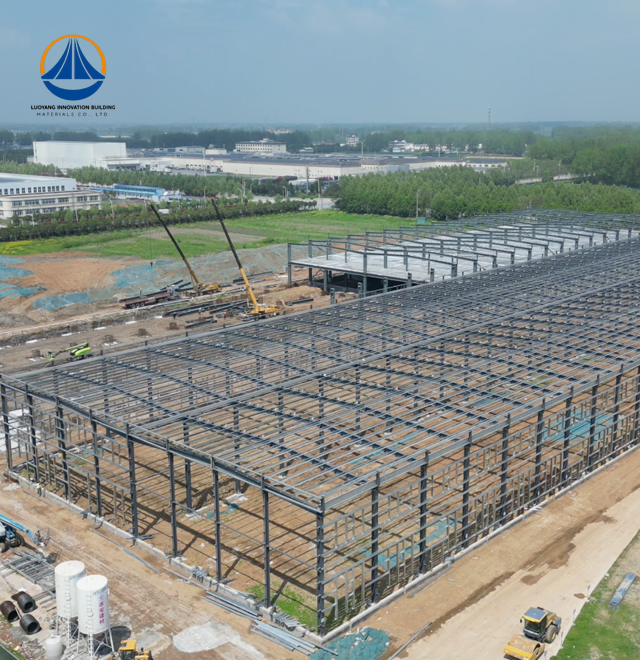
A good erection starts a long time before the first bolt is turned. Standardized prefabricated parts are made in the factory, so on-site workers focus on putting things together instead of making them. Compared to cast-in-place concrete, this dry-construction method shortens the building process by about 30% to 50%. This means that production can begin earlier and the capital can be recovered faster.
In order to follow the rules for handling, cranes must have capacities that are at least 1.25 times the beam's estimated lift weight, and the plant must mark the approved rigging points. The AISC Code of Standard Practice allows alignment margins of ±3mm for column plumb and ±6mm for beam elevation. This level of accuracy is very important in cleanrooms and semiconductor settings where equipment performance is affected by floor flatness.
Hot-rolled H-beams and I-beams go through high-temperature processing that gets rid of any remaining stress and makes the cross-section's mechanical qualities the same all the way through. This path works well for heavy structural framing that needs to be strong at yield and tough under dynamic loads.
Cold-formed sections, like C/Z purlins and light-gauge square tubes, are shaped at room temperature, which makes the size limits smaller and the surface smoother so that protective coats stick to it better. Cold-forming is a high-precision, cost-effective way to make secondary structural systems like galvanized purlins and tie rods.
The choice of coating has a big effect on the overall cost. Hot-dip galvanization adds a layer of zinc that is 85–100 εm thick. This layer protects against corrosion for 25–50 years in normal conditions. C5-grade epoxy-polyurethane systems make that protection window longer, to 50 years or more in harsh industrial settings like chemical plants, coastal warehouses, or food processing plants that wash down their equipment with a lot of water.
When planning when to place large orders, procurement teams should keep an eye on steel price indices like the CRU Steel Price Index. When you commit to buying 50 tons or more, certified makers will usually lower their prices by 5 to 12 percent. Also, combining orders saves a lot of money on freight costs on routes across the ocean to U.S. ports.
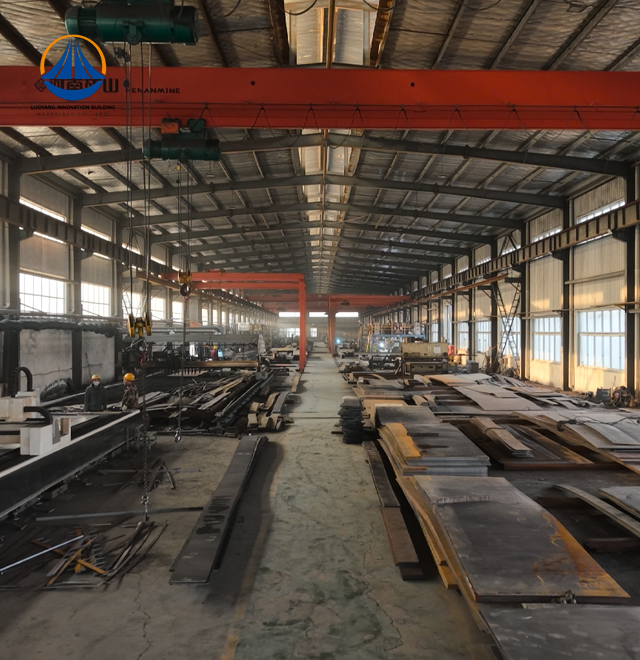
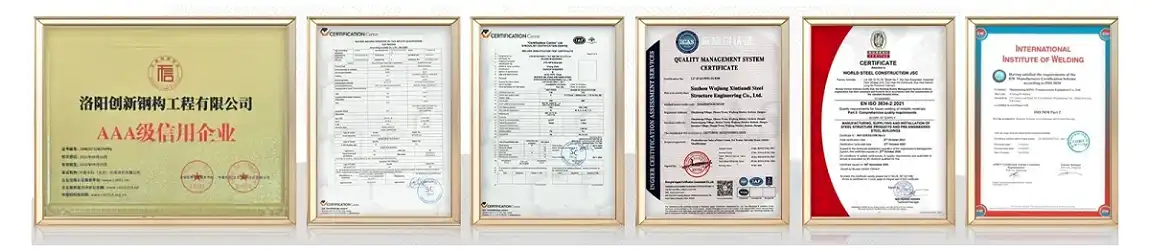
To find the best Steel Structure Beam supplier, you need to look at more than just the prices in a catalog. The most trustworthy manufacturers have multiple certifications, such as ISO 9001, CE, COC, and PVOC, and they run dedicated intelligent processing lines that can make tens of thousands of tons of products every year. Certifications show that quality management systems are in place at every stage of production, from being able to track down raw materials (mill test certificates for each heat number) to checking the final dimensions.
Here are the important factors that buying managers should use for evaluation:
After the sale, qualified suppliers also offer structural advice to make sure that any changes made in the field stay within the original design envelope. This is an important safety measure in GMP pharmaceutical facilities and precision electronics cleanrooms.
Steel structural frames are supposed to last 50 years, but they only need simple maintenance every so often. Visual checks should be done once a year to record the state of the coating, the strength of the connections at bolted joints, and any signs of localized corrosion at the points where the beam and column meet. Ultrasonic testing (UT) and magnetic particle inspection (MPI) are non-destructive ways to check the continuation of weld seams in areas with a lot of stress without stopping production.
If the surface breaks down to rust grade B according to ISO 8501-1, it can be fixed without taking the whole thing apart by spot-blasting it with an abrasive and then coating it again with a zinc-rich primer. With strain gages and accelerometers built into key nodes of structural health tracking systems, site managers can see how the building is being used in real time and plan repairs ahead of time instead of after the fact.
Because steel can be recycled over and over again, destroying it at the end of its useful life creates recoverable value instead of a waste risk. This aligns long-term asset management with the ESG reporting standards that U.S. institutional investors and industrial park owners are increasingly asking for.
Industrial construction in pharmaceuticals, food processing, electronics, and commercial development all share one conclusion: steel structural framing can provide greater strength, faster assembly, and more design flexibility than concrete on a large scale. From choosing the right Steel Structure Beam and ensuring the design meets load requirements to using galvanized secondary systems and maintaining the structure throughout its service life, each decision contributes to either a reliable building or an expensive risk. Selecting the appropriate Steel Structure Beam is therefore an important part of achieving structural performance and long-term durability. The difference between a successful project and one that experiences costly delays often depends on choosing a certified manufacturer with genuine intelligent production capacity and end-to-end technical support for every Steel Structure Beam application.
Wider ends and stronger webs on H-beams make them better for heavy-duty, long-span industrial frames. I-beams are lighter and work well as secondary members where pure bending is the norm.
Steel doesn't catch fire, but at 550°C, it loses about half of its bending strength. Building code fire-resistance ratings must be met with either intumescent paint or fire-rated cladding.
In cold places, grades like S355J2+N or A572 Grade 50 that have guaranteed Charpy V-notch impact toughness keep the steel from breaking into brittle pieces.
Yes, you can increase the load capacity by adding more fixed connections or welding on support plates, as long as all changes are approved by a licensed structural engineer.
A hot-dip galvanized base coat and a C5-rated epoxy topcoat provide the best long-lasting protection in food preparation and pharmacy plants that are washed down often.
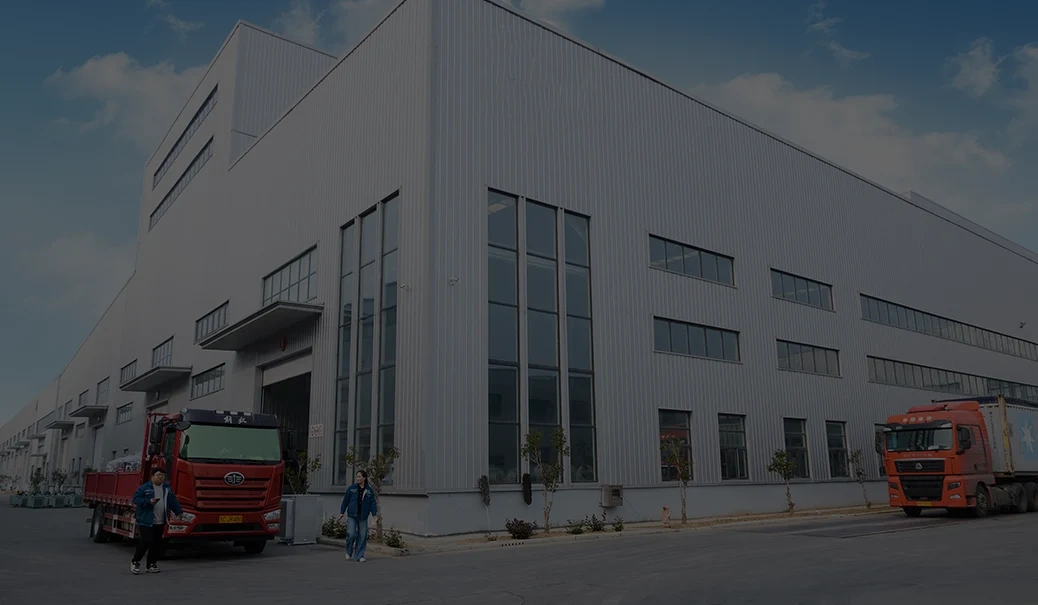
Luoyang Innovation Building Material Co., Ltd. has an ISO 9001, CE, COC, and PVOC-certified production base that is 50,000 m² and can process 50,000 tons of steel every year. We offer full design packages, quick production lead times, and lightweight H-beam and square-tube frames as a reliable Steel Structure Beam supplier. All of this is done under one roof. To get a personalized quote, please email our engineering team at eric@cxsteelstructure.com or go to innovationsteelstructure.com.
1. American Institute of Steel Construction (AISC). Steel Construction Manual, 16th Edition. AISC, 2023.
2. European Committee for Standardization. EN 10025: Hot-Rolled Products of Structural Steels. CEN, 2019.
3. Gorenc, B., Tinyou, R., & Syam, A. Steel Designers' Handbook, 8th Edition. UNSW Press, 2012.
4. Salmon, C. G., Johnson, J. E., & Malhas, F. A. Steel Structures: Design and Behavior, 5th Edition. Pearson Prentice Hall, 2009.
5. World Steel Association. Steel Industry in Figures 2023. worldsteel.org, 2023.
6. Tamboli, A. R. Handbook of Structural Steel Connection Design and Details, 3rd Edition. McGraw-Hill Education, 2016.
March 18, 2024
Their steel structures are exceptionally strong and precisely manufactured. The entire production process was highly professional.
September 7, 2024
We were impressed by their advanced steel structure production line and excellent fabrication quality. The final products met our project requirements perfectly.
February 14, 2025
From structural design and detailing to fabrication and delivery, their technical team provided professional support throughout the project.
July 22, 2026
The steel structure components showed excellent precision, durability, and workmanship. Their reliable service gave us great confidence in the project.