
March 18, 2024
Their steel structures are exceptionally strong and precisely manufactured. The entire production process was highly professional.
Aug 4, 2026
When project managers and procurement professionals face mounting pressure to deliver industrial facilities faster without compromising quality, prefabricated steel structure buildings emerge as the definitive solution. These engineered systems dramatically reduce construction timelines by 30-50% compared to traditional methods, allowing pharmaceutical factories, food processing plants, and semiconductor manufacturers to achieve operational readiness months ahead of schedule. The secret lies in the industrialized manufacturing process, where precision-engineered components arrive ready for rapid assembly, eliminating weather delays and site uncertainties that plague conventional concrete construction.
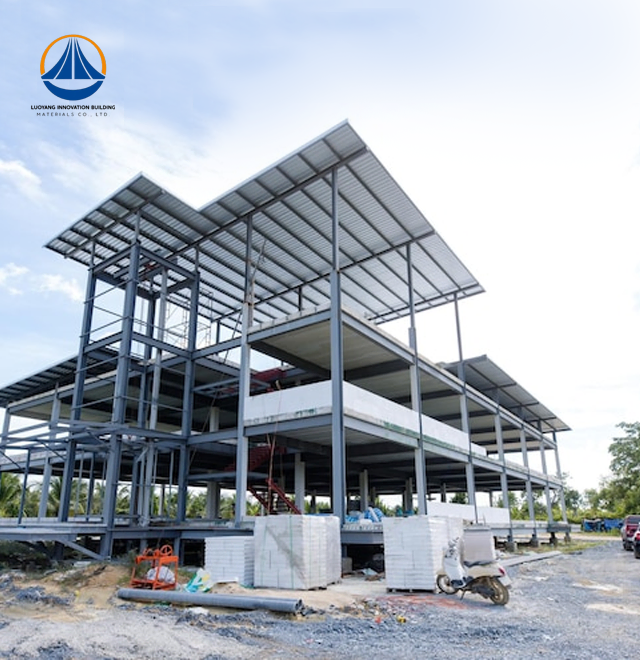
Prefabricated Steel Structure Buildings represent a revolutionary way to build. The structural parts are made in a controlled factory environment and then brought to the construction site to be put together quickly. In traditional building, which depends a lot on the weather and the order of work, this method moves the difficulty to the manufacturing plant.
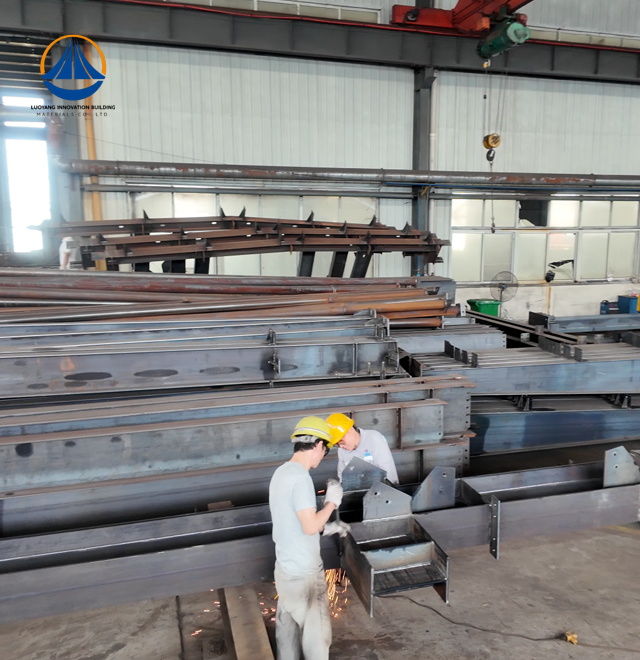
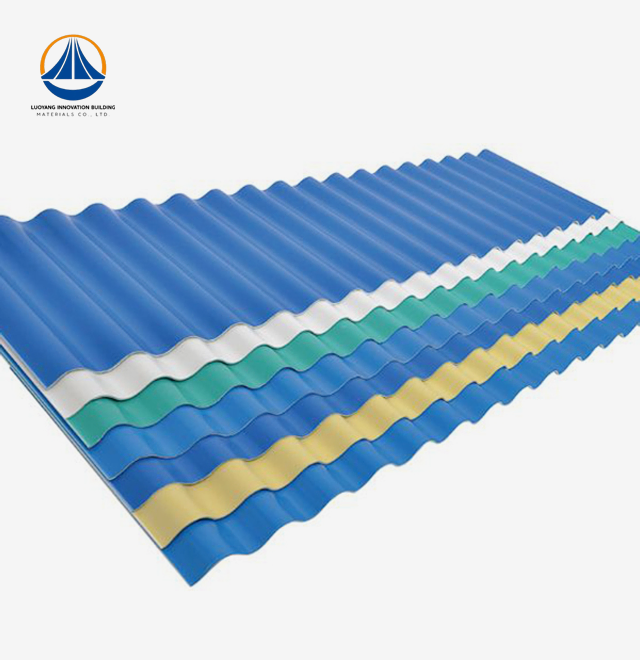
The main difference starts with the design phase. High-quality carbon steel, like Q355B or Q235B, is used to build buildings. These steels have yield strengths between 235MPa and 345MPa. With millimeter-level accuracy, automated equipment makes parts like H-beams, square steel tubes, galvanized purlins, and coated steel sheets. This centralized quality control makes sure that the measurements are correct in a way that can't be done by hand on-site.
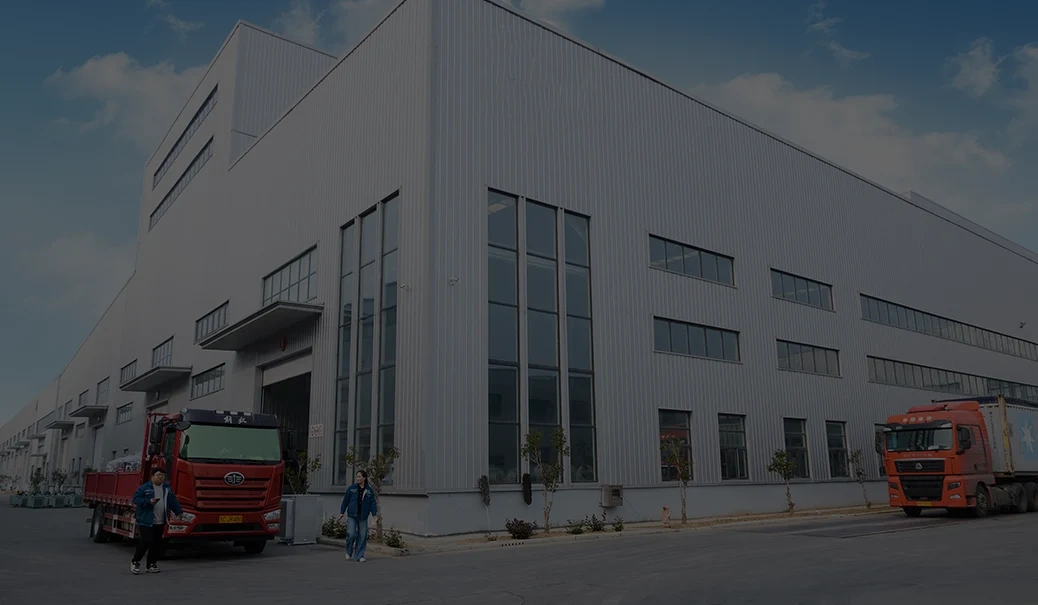
Our factory has a production base that's 50,000 square meters and can handle more than 50,000 tons of goods every year. It uses smart steel structure processing lines that make sure the quality of each part is always the same. Before leaving the plant, every piece goes through a lot of testing, including Ultrasonic Testing, Magnetic Particle Testing, and Mill Test Certificate Verification, to make sure there are no flaws.
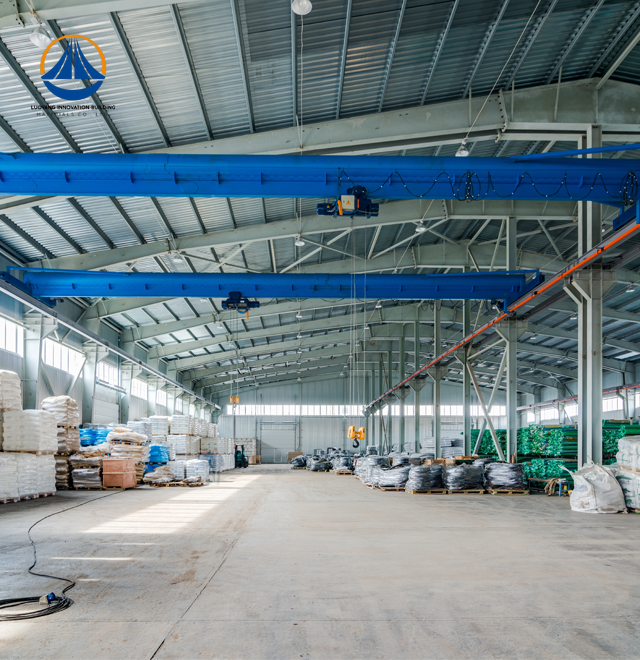
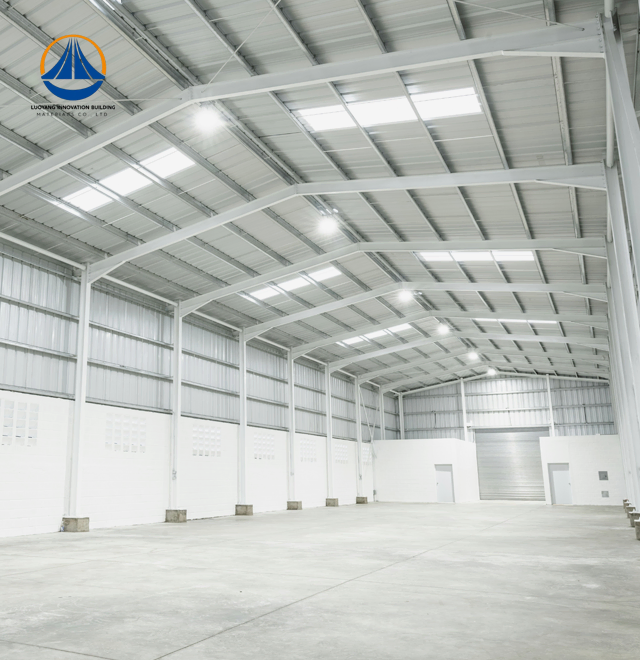
When it comes to strength-to-weight ratio, steel structures are better than reinforced concrete buildings. They weigh 30–40% less but can hold more weight. Because of this, large-span plans up to 180 meters can be made without any columns in the middle. This makes for flexible, open areas that are great for storing equipment, running production lines, and running a warehouse. Because the structure is lighter, the foundation costs are lower, and ground treatment standards are easier to meet.
Another important benefit is that it is resistant to earthquakes. Because steel has a smooth surface and is very flexible, buildings made of it can absorb a lot of energy during earthquakes, earning Seismic Grade 7 ratings and Structural Safety Level II ratings. Intumescent coatings keep buildings up to Fire Rating II standards, and sandwich panels with EPS, PU, or Rockwool cores provide excellent thermal insulation that is necessary for pharmacy and food processing settings that need to keep things at a certain temperature.
Steel buildings are great for the earth and meet all of today's ESG guidelines. Dry building methods keep project sites as clean and quiet as possible by reducing dust, noise, and waste. More importantly, steel can still be recycled indefinitely, which supports the circular economy ideas that are becoming more and more important in purchasing decisions. When buildings reach the end of their useful lives, their materials can be reused or recycled, which is better for the environment than tearing down concrete buildings.
There are always problems with traditional building that make schedules and budgets harder to meet. Unpredictable project results are caused by things like weather-dependent concrete drying, a lack of workers, and inconsistent quality. Purchasing managers always say that budgets go over by an average of 15 to 25 percent and schedules get behind by 3 to 6 months. Prefabricated Steel Structure Buildings address these issues through industrialized precision.
Factory-based prefabrication works no matter what the weather is like outside. Unlike concrete buildings, which stop when it freezes or rains too much, steel component making goes on all year. This ability to work in any weather is especially helpful for projects in places with tough temperatures or short building seasons. No matter what the weather is like, the parts get to the job site ready to be put together. Bolted connections and welding can be done even in tough conditions.
Controlled workplace settings allow for high standards that can't be met on building sites. Automated welding equipment makes sure that joints are always strong, and comparing measurements to Building Information Modeling makes sure that parts fit together correctly when they are put together. Pharmaceutical GMP facilities and semiconductor cleanrooms need manufacturing processes that are ISO 9001 certified, follow AISC design standards, and meet ASTM material compliance. This gives them the technical assurance they need.
Our technical team is in charge of every step of the production process, from breaking down the design and drawings to planning out every detail of the fabrication. This all-around approach gets rid of the coordination gaps that usually lead to extra work and delays. When a 12,160-square-meter warehouse project measuring 180m x 68.9m x 7.67m gets to the installation site, every H-beam, purlin, and panel fits exactly as planned, which cuts down on assembly time by a huge amount.
When industrial clients choose steel structure solutions, the construction cycle is always cut by 30 to 50 percent. Using traditional methods, building a normal large-span warehouse would take 12 to 14 months. With prefabrication, the building can be approved in just 6 to 8 months. This speeding up lets drug companies start checking for GMP compliance earlier, food processors take advantage of seasonal market opportunities, and electronics factories quickly meet production needs.
The normal production cycle from project acceptance to delivery is 60 days, which makes planning the project more doable. When engineering managers know that parts will arrive on time, they can confidently schedule work teams, power connections, and equipment purchases. This predictability gets rid of the wasteful use of resources and expensive downtime that come with uncertain building plans.
Modularity, accuracy, and adaptability are important ideas in modern Prefabricated Steel Structure Buildings production. These basic ideas make it possible for buildings to change to meet the needs of businesses while still being structurally sound and running smoothly.
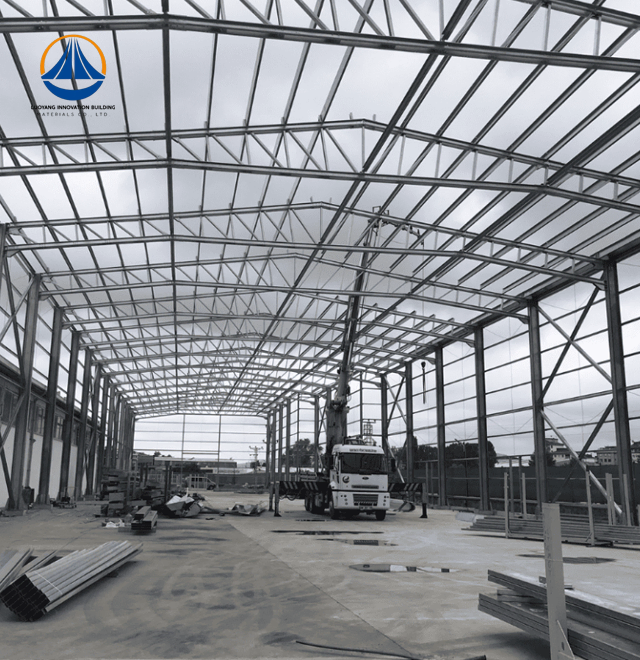
Steel structures use standard types of parts that can be put together in almost infinite ways to make buildings. Portal frame systems with square or H-shaped steel tubes make up the main structure. Galvanized purlins and other supporting parts make the framework stable. This modularity lets you make changes without having to do completely new work for each job.
For basic weather protection when storing equipment, buildings can be made with single-skin steel sheet cladding. For better temperature control, buildings can be upgraded with insulated sandwich panels. Panels that work better in terms of temperature are useful in food processing facilities, while pharmaceutical cleanrooms use special wall and ceiling systems that meet high standards for preventing contamination.
Automated manufacturing equipment is very good at turning raw steel into precise parts very quickly. Cutting, drilling, and welding systems that are controlled by computers can do work faster and more accurately than people can do it by hand. Surface treatment methods, such as hot-dip galvanization, add zinc coats of at least 600g/m², which keep steel from rusting even in high-humidity coastal areas.
Integrating Building Information Modeling is a huge step forward in how designs are coordinated. Architects, structural engineers, and MEP designers can find problems with digital models before the building is built. The three-dimensional model helps with difficult projects where the HVAC systems, process pipes, and electrical wiring for the cleanroom need to fit in with the structure perfectly.
Future growth may be the most important thing to think about when designing something. With modular design, buildings can grow either horizontally or vertically with little impact on how they work now. As the need for storage grows, warehouses can add more bays. As ways of making things change, production areas can be rearranged. This ability to adapt saves capital investments by making buildings more useful as business needs change.
Because steel construction is so light, existing foundations can often handle expansions that would put too much stress on concrete structures. When looking at long-term facility strategies, purchasing managers like this inherent flexibility because they know that initial construction costs are only one part of lifecycle value.
For successful purchase of Prefabricated Steel Structure Buildings, you need to know more than just the original price quotes. Managers of engineering projects and people who buy things must look at a lot of different factors that affect the results of the project and how well it works in the long run.
The initial costs of building with steel are usually about the same as those of building with concrete. In fact, based on the size and complexity of the building, steel structures can often save 5 to 15%. When shorter deadlines are taken into account, the cost benefit grows by a large amount. Cutting the time it takes to build something by four months means that money can be made earlier, the cost of intermediate financing is lower, and the cost of site management is lower.
The need for a foundation is another big cost factor. Because steel structures are 30–40% lighter than concrete equivalents, they significantly lower foundation loads. In places where concrete buildings would need extensive pile supports or ground repair, simple ground treatment is often enough. These savings can cover 10 to 20 percent of the total cost of building something on sites with difficult dirt.
When looking for the best Prefabricated Steel Structure Buildings provider, you need to look at more than just price. Getting ISO9001, CE, COC, or PVOC certifications is a good way to make sure that the quality of a product meets foreign standards. ASTM material compliance makes sure that the qualities of steel meet the needs of engineers.
Production capacity has a direct effect on how reliably deliveries happen. Suppliers with large factories that produce more than 50,000 tons of goods a year can work on more than one project at the same time without delays caused by limited capacity. Our 50,000-square-meter production base keeps up steady output even during busy building seasons, when smaller makers have trouble keeping up with backlogs.
Standard built-to-order production cycles take about 60 days from the time the project is accepted until the parts are delivered. This schedule lets you make realistic plans for the job that fit in site preparation, foundation work, utility installs, and the arrival of parts. When engineering managers plan the order of tasks, they can avoid the wasteful waiting times and extra costs that come with projects that aren't well coordinated.
Lead times may be longer for custom projects that need specialized engineering, but they rarely go over 90 days, even for very complicated uses. The important thing is to involve suppliers early on in the planning process. When manufacturers are involved in planning from the start, they can find ways to make things easier to build while still staying true to the architect's vision.
The benefits of Prefabricated Steel Structure Buildings for productivity go far beyond the initial construction phase. They last for decades and years with little to no downtime. Procurement experts can figure out the true lifecycle value of a product by learning about its maintenance needs and longevity.
Steel structures that are properly designed and covered usually last between 50 and 70 years, which meets permanent building standards. The regular qualities of the material stop concrete from breaking down over time due to alkali-aggregate reactions, freeze-thaw cycles, and chloride-induced reinforcement corrosion. When steel is kept from oxidizing, it keeps its solid features forever.
Seismic resilience makes sure that buildings can handle extreme events without falling down in a big way. Because steel is flexible, it can absorb energy during earthquakes that would break concrete parts. This strength protects not only the building itself, but also the valuable tools, supplies, and production abilities that are kept inside.
To keep a steel building working well, it only needs simple preventative care that focuses on stopping rust. Coatings should be checked regularly, especially at joints and edges that are left open. This helps find small problems before they get worse. When compared to concrete spalling repairs, which need scaffolds and production shutdowns, localized coating repair is still cheap and doesn't cause any problems.
Buildings that are in tough settings need better ways to protect them. Facilities near the coast that are subject to salt spray use hot-dip galvanization with high-zinc epoxy starters to achieve ISO 12944 standards for C4/C5-M corrosion protection. These strong coating methods greatly increase the time between upkeep tasks, which lowers the overall cost of ownership while keeping the structure's look and strength.
Steel buildings that are well taken care of cause fewer problems with production over the course of their useful lives. Clean manufacturing environments are ones where there aren't any falling concrete blocks, water getting in through walls that are breaking down, or structural movement caused by foundation settlement. Because of this reliability, there are no unplanned shutdowns for emergency repairs, which directly boosts productivity.
Steel's strength makes it possible for production lines to be rearranged as processes change because it doesn't have any columns. Managers of factories can change the structure of their equipment without having to deal with structural problems that would require expensive building changes. Over decades of use, this operating flexibility adds to the time saved during building.
Prefabricated Steel Structure Buildings improve work efficiency and productivity by getting rid of many of the problems that come up with traditional building methods. These engineered systems offer accuracy, speed, and dependability that can't be matched by methods done on-site by moving complexity to controlled factory settings. The 30–50% shorter time frame allows for earlier operating readiness, faster return on investment, and better placement in the pharmaceutical, food processing, electronics, and industrial sectors. Steel structures are the best choice for procurement professionals who want to make sure that both the short-term success of a project and the long-term value of a building are maximized. This is because they are very durable, flexible, and environmentally friendly.
Construction of Prefabricated Steel Structure Buildings is 30–50% faster than that of traditional concrete buildings. With a normal 60-day production cycle for parts and quick assembly on-site using bolted connections, long drying times and weather delays that come with building with concrete are no longer a problem. Large industrial buildings that normally take 12 to 14 months to finish can be up and running in 6 to 8 months.
With the right corrosion protection and regular upkeep, steel structures can last 50 to 70 years, which is the same length of time as fixed buildings. The material's consistent properties and better ability to withstand earthquakes make it last longer than concrete in many situations. Hot-dip galvanization and high-performance finishes guard against the elements, such as salt spray from the coast and the atmosphere in factories.
Of course. Steel structures give controlled environments the stable framework they need. Using special cleanroom panels, insulated sandwich walls, and precision-sealed ceilings together makes areas that meet GMP compliance standards and food safety rules. The short time frame for building is especially helpful for drug companies that need to get production up and running quickly so they can get governmental approvals.
The Prefabricated Steel Structure Buildings projects that Luoyang Innovation Building Material Co., LTD works on include pharmaceutical facilities, food processing plants, semiconductor cleanrooms, and industrial buildings. They have unmatched experience in these areas. Our factory is ISO9001, CE, and ASTM-certified and makes more than 50,000 tons of products every year. These products can be used for projects of any size and are delivered on time. We can do everything, from the initial design and BIM modeling to manufacturing, surface treatment, and helping with placement on-site.
From the idea stage to the acceptance of the finished project, our technical team oversees every step of the process and makes sure that everything runs smoothly. Our engineered solutions give your organization the faster timelines and lifecycle value it needs, whether it's a large equipment storage building, a temperature-controlled production space, or a precise cleanroom environment. We have a large inventory of materials, state-of-the-art processing equipment, and tried-and-true project management methods that take away the uncertainty that comes with traditional construction.
Email our buying experts at eric@cxsteelstructure.com to talk about your particular needs. We give you accurate cost estimates, unique design choices, and technical information to help you make smart decisions. As a reputable maker of Prefabricated Steel Structure Buildings, we know how important it is to have reliable delivery, high-quality technical performance, and quick customer service. Find out how our solutions can make your projects more efficient and help you get ahead of the competition faster.
1. American Institute of Steel Construction. (2022). Steel Construction Manual (15th ed.). Chicago: AISC Publications.
2. Lawson, R.M., & Ogden, R.G. (2021). Modular Construction Using Light Steel Framing: An Architect's Guide. London: The Steel Construction Institute.
3. Davies, J.M. (2020). Structural Steel Design to Eurocode 3 and AISC Specifications (2nd ed.). Oxford: Wiley-Blackwell.
4. Smith, B.W., & Coull, A. (2019). Tall Building Structures: Analysis and Design. New York: John Wiley & Sons.
5. Trebilcock, P., & Lawson, R.M. (2018). Architectural Design in Steel. London: Spon Press.
6. International Organization for Standardization. (2020). ISO 12944: Paints and Varnishes — Corrosion Protection of Steel Structures by Protective Paint Systems. Geneva: ISO Standards.
March 18, 2024
Their steel structures are exceptionally strong and precisely manufactured. The entire production process was highly professional.
September 7, 2024
We were impressed by their advanced steel structure production line and excellent fabrication quality. The final products met our project requirements perfectly.
February 14, 2025
From structural design and detailing to fabrication and delivery, their technical team provided professional support throughout the project.
July 22, 2026
The steel structure components showed excellent precision, durability, and workmanship. Their reliable service gave us great confidence in the project.